MEA-based primary amine field screen with three operating modes

Chemi-Sense amine residual field screen (MEA-based primary amine). Three modes: (1) low-range 0–10 ppm with the kit warmer at 167°F (75°C) in about 35 minutes; (2) high-range 20–200 ppm with heater at 167°F (75°C) in about 15 minutes total; (3) high-range ambient 20–300 ppm with no heat, up to a 5-hour ceiling. Kit includes the warmer. Field screen, not a lab replacement. Request a callback: https://chemi-sense.com/contact

Chemi-Sense Amine Residual Field Test for Corrosion Inhibitors

Use this MEA-based primary amine field screen with the matching calibration chart. The low-range mode develops in about 35 minutes at 167°F (75°C) with the kit warmer; high-range heater mode uses 167°F (75°C) for about 15 minutes total; high-range ambient mode is 20–300 ppm with no heat, up to a 5-hour ceiling.
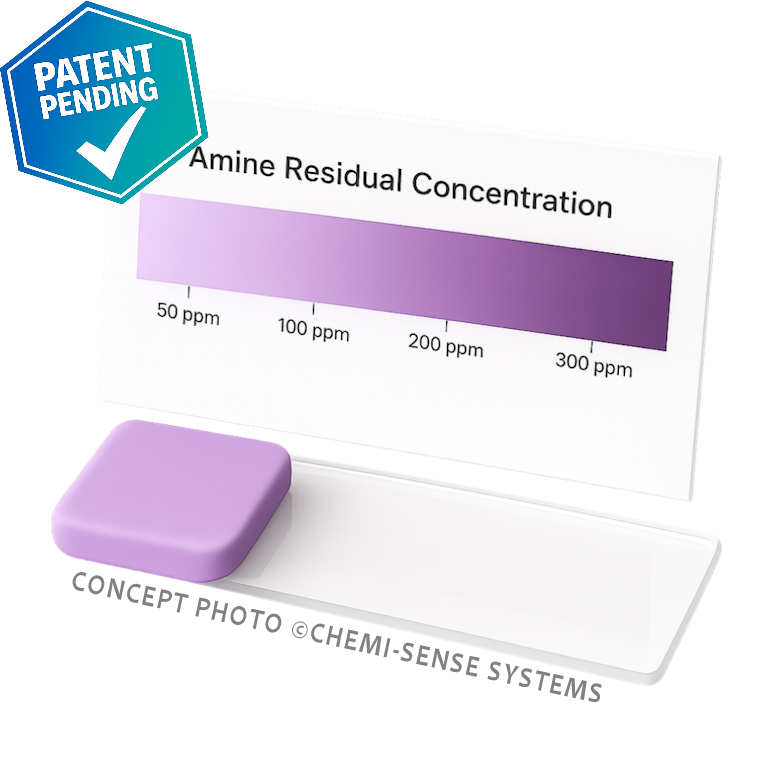
Chemi-Sense amine residual sensor film with purple colorimetric response

Chemi-Sense amine residual field screen (MEA-based primary amine) with three modes: (1) low-range 0–10 ppm with the kit warmer at 167°F (75°C) in about 35 minutes; (2) high-range 20–200 ppm with heater at 167°F (75°C) in about 15 minutes total; (3) high-range ambient 20–300 ppm with no heat, up to a 5-hour ceiling. Field screen, not a lab replacement.

This portable, self-contained test provides measurable, repeatable results that allow for same-day system adjustments and optimized inhibitor dosing without waiting for tedious laboratory turnaround.

  • Three operating modes: 0–10 ppm warmer, 20–200 ppm heater, or 20–300 ppm ambient.
  • Eliminates shipping and lab delays.
  • Enables on-site monitoring and rapid corrective action.
  • Compact, easy-to-use design with minimal training required.
  • Kits/charts for 0–10 ppm, 20–200 ppm heated, and 20–300 ppm ambient.
  • Collect your sample.
  • Immerse the sensor film per the kit insert for that range.
  • For 0–10 ppm, develop with the kit warmer at 167°F (75°C) for about 35 minutes.
  • For 20–200 ppm with heater, develop at 167°F (75°C) for about 15 minutes total.
  • For 20–300 ppm at ambient, use no heat and allow up to a 5-hour ceiling.
  • Compare to the matching calibration chart for that range.
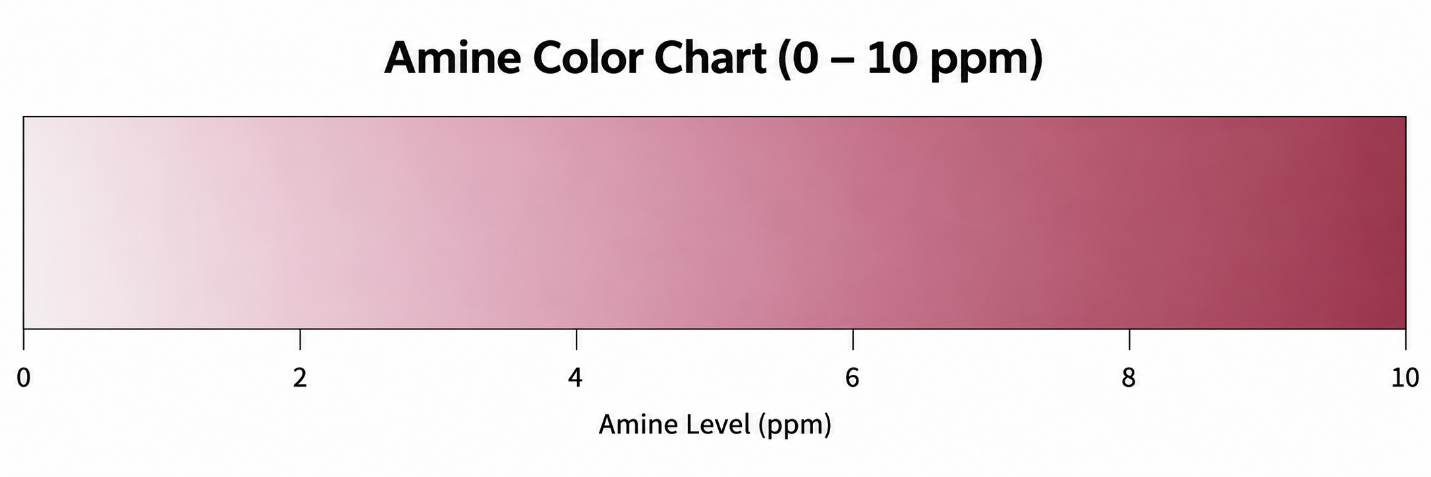
Amine residual concentration color calibration chart
  • Sensor response: three modes—0–10 ppm with the kit warmer, and 20–200 ppm with heater or 20–300 ppm at ambient—using matching calibration charts.
  • Applications: MEA-based primary amine corrosion inhibitors. Other primary amines, secondary amines, and ammonia can affect the reading.
  • Field-screen results are compared with the matching calibration chart.
  • Low-range response: about 35 minutes at 167°F with the kit warmer.
  • High-range heater mode: 167°F (75°C) for about 15 minutes total; ambient mode: no heat, up to a 5-hour ceiling.
  • Minimum exposure: follow the kit insert for the applicable range.
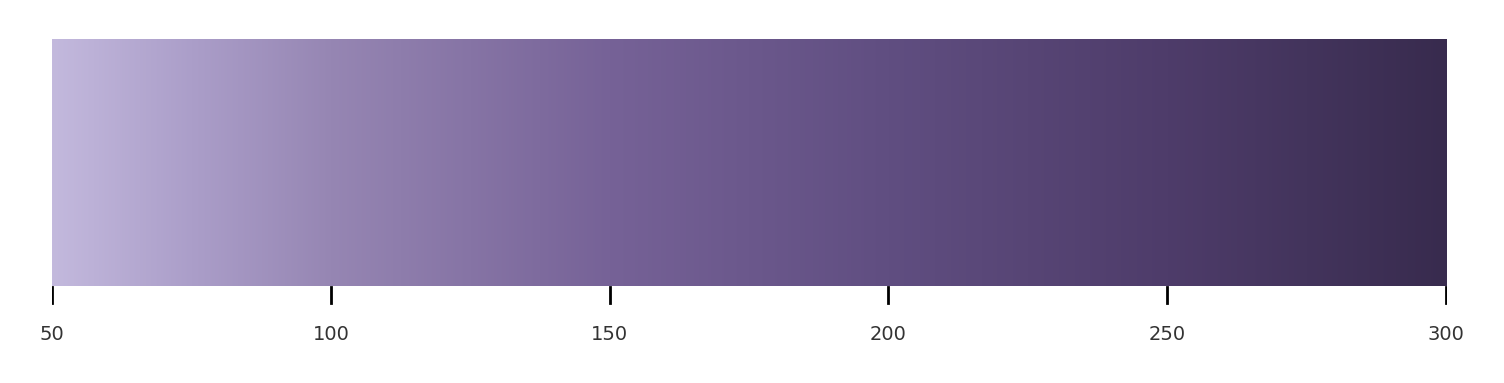
Amine residual concentration reference chart
High-range reference. Use the calibration chart supplied with your kit for the mode you run.

FAQs

Each test includes sensor film, a range-specific calibration chart, a drying container, and user instructions.

It screens residual MEA-based primary amine in a sample, expressed in ppm (parts per million). Other primary amines, secondary amines, and ammonia can affect the reading.

No. It is designed for MEA-based primary amines and does not work with tertiary amines. Other primary amines, secondary amines, and ammonia can affect the reading. Contact us before using it with other amine types.

Three modes are available: 0–10 ppm with the kit warmer at 167°F (75°C) in about 35 minutes; 20–200 ppm with heater at 167°F (75°C) in about 15 minutes total; or 20–300 ppm at ambient with no heat, up to a 5-hour ceiling.

Follow the kit insert for the applicable range.

It is a field screen, not a lab replacement. Compare the developed film with the calibration chart for the mode you ran: 0–10 ppm (warmer), 20–200 ppm (heated), or 20–300 ppm (ambient).

No. Use the field test as a rapid field check, not as a substitute for a lab analyzer or specialized laboratory gear.

Compare the developed film color against the included calibration scale to determine amine concentration.

Yes. The 0–10 ppm mode uses the kit warmer at 167°F (75°C) and develops in about 35 minutes. The 20–200 ppm heater mode uses 167°F (75°C) for about 15 minutes total. The 20–300 ppm ambient mode uses no heat and allows up to a 5-hour ceiling.

The strip responds to primary amines. Other primary amines, secondary amines, and ammonia can affect the reading. Treat it as a screen and contact us with your sample matrix before relying on it.

No. Each film is single-use only for one test.

Ensure the film remains immersed per the kit insert for that range. Drying during exposure may increase the reaction time.

Yes. Always view color under consistent lighting and use the provided chart.

Shelf stability is still being tested. Follow the kit insert.

Store unused films in the glass petri dish provided. A refrigerator at about 4°C gives the best results when available. Otherwise keep them at room temperature, away from direct sunlight and heat. Follow the kit insert.

Yes. Cooler storage (about 4°C) is preferred when practical; follow the kit insert. Shelf stability is still being tested.

Dispose of used films and sample residues according to your facility’s chemical waste procedures.

No formal training required. The kit comes with easy instructions.

It’s designed for batch or spot testing, not continuous monitoring. We are currently developing a continuous monitoring technology.

If color appears inconsistent or outside the range, retest with a fresh film and verify sample handling steps.

Contact Chemi-Sense support to discuss compatibility or future sensor variants.

A digital companion app for automatic color quantification is under evaluation. Stay tuned for updates.

It is not designed to be inserted into high-pressure lines. Collect a representative sample and test it per the kit insert.