
What pH Really Tells Us is October 21 at 11:00 a.m. Central, with Tom Pickthall. Register.
Field chemistry for corrosion control
Between the sample and the lab report, you’re flying blind.
Scheduled grabs and lab turnaround leave hours to days where inhibitor, pH, and dissolved iron can drift and corrosion chemistry doesn’t wait.
Screens chemistry in the field; prioritize your lab sample
Consequence
Over/under-treat
Inhibitor spend and residual risk drift while you wait.
Delayed go / no-go
Integrity calls sit on lab lag instead of a field screen.
Routine lab fees
Pay lab turnaround for checks a field film can triage.
Water-phase chemistry without waiting on extraction.
Colorimetric films respond to target chemistry with limited preparation
Dip / develop
Compare chart
Act or escalate
Field screen and prioritize
Products
pH field test
pH field screen in complex hydrocarbon samples. Ambient, under 2 min.*
Ferrous iron (Fe²)
Dissolved Fe2+ field screen in complex samples. Ambient, under 2 minutes.*
Amine residual
MEA detection in complex samples. 0–10 ppm (warmer ~35 min at 167°F); 20–200 ppm with heater (25 min at 167°F); or 20–300 ppm ambient (up to 5 hr).*
How it works
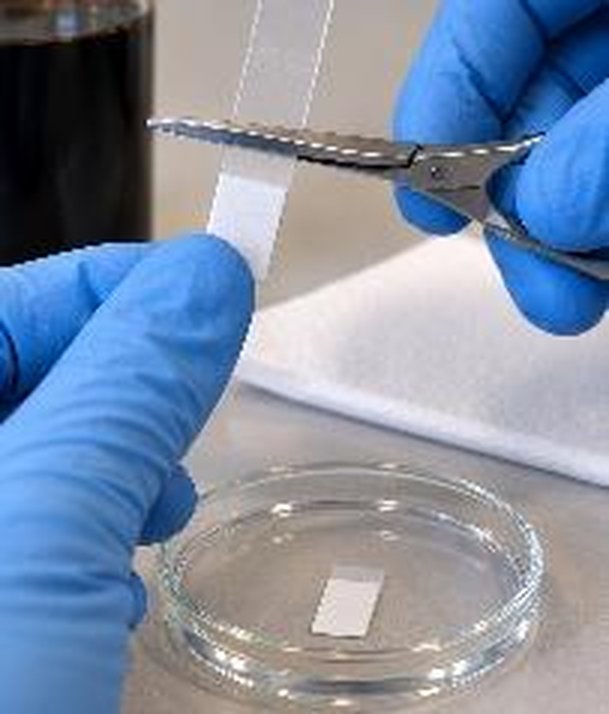
Collect sample
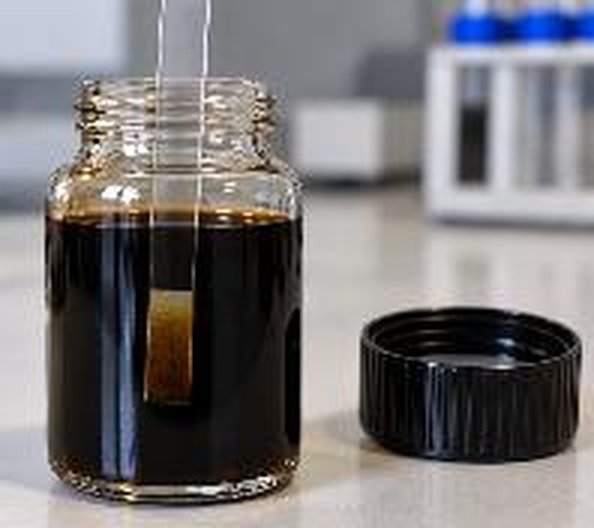
Dip film into sample
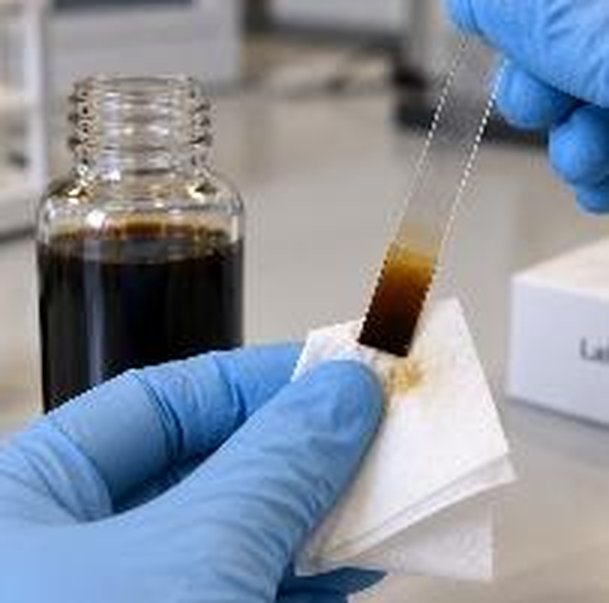
Blot off excess liquids
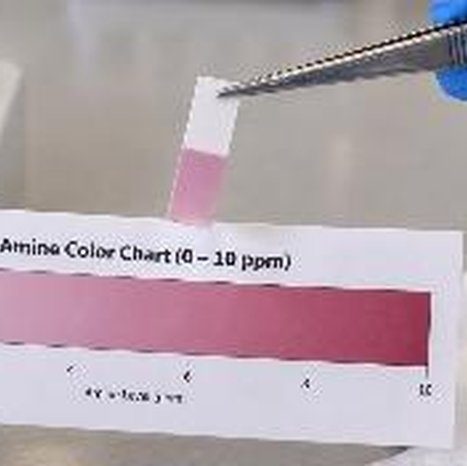
Match color to the chart
*pH is under 2 minutes at ambient; Fe²⁺ is under 2 minutes at ambient; amine low-range is 0–10 ppm with warmer at 167°F for ~35 minutes; amine high-range heater is 20–200 ppm at 167°F for 25 minutes total; high-range ambient is 20–300 ppm with no heat up to a 5-hour ceiling.
Built by corrosion people
- Validated in crude oil and produced water
- 65+ years combined experience
- University and Regulatory backed technology
Who it’s for
Pipeline, Refining, Gathering | Field techs | Chemical program owners
Narrow the blind window on your next round.
Tell us fluid, location, and which screen (pH / Fe²⁺ / amine). We respond within one business day.